
Navigating the Risk of AI Image Manipulation in Schools
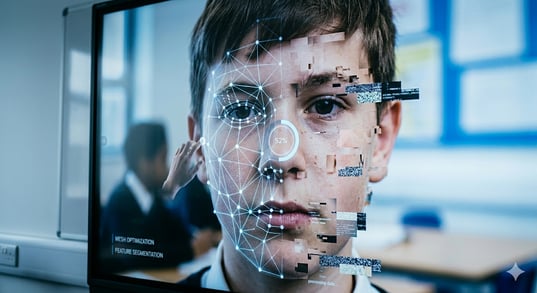
As school leaders, our duty to safeguard children and young people seamlessly extends into online spaces. While publishing images on our websites and social media channels helps to share and celebrate achievements and show the vibrancy of school life, advancements in technology have introduced an alarming risk: the unauthorised harvesting and manipulation of school imagery.
A growing concern is where photos of pupils or staff are taken from websites, social media channels and marketing materials. These images are then processed using artificial intelligence tools - such as freely available ‘nudification’ apps - to create non-consensual, synthetic sexual imagery, including AI-generated child sexual abuse material (AI CSAM). The AI tools used to create such abhorrent and illegal images (photos and videos) are neither difficult to find nor use. The reality of this threat requires our attention and proactive leadership.
The Internet Watch Foundation (IWF) has also published recent data about the significant increase in AI Generated CSAM being found by their analysts, suggesting that this technology is already in the wrong hands.
This has led to new guidance being published this month by the UK Online Harms Early Warning Working Group.
Understanding the Harm and Risks
Is this just fear-mongering? Whilst, of course, we want to continue celebrating the successes of our school and children, the risk landscape has undoubtedly changed. This is no longer a hypothetical scenario, and neither is it victimless. If most parents and carers knew that their child's image on a website or social media channel could be used to make very real looking, sometimes violent abuse material, would they still consent to their images being published?
The creation of synthetic intimate imagery carries severe real-world consequences
-
-
Vulnerability to Blackmail:
Perpetrators can use manipulated images to blackmail individuals or the school itself, demanding money under the threat of public exposure.
-
Significant Risk to Already Vulnerable Children:
The non-consensual sharing and modification of student photos directly compromises the safety of vulnerable children, such as Looked After Children or those on child protection plans, by exposing personal data or location routines.
-
-
-
Profound Emotional Distress:
The emotional toll on the victims, whether they are pupils or staff members, and their families, is immense. Dealing with these breaches is also heavily distressing for the safeguarding teams managing the fallout. And if deepfakes are shared on the web, they are difficult to totally remove, and so the consequences can be long term.
-
Practical Actions
Senior leadership teams should arrange for a review of what imagery of staff, children, and leaders is publicly available, and then consider the actions required to prevent harm. Such as:
-
-
Re-evaluate Image Necessity- Ask the fundamental question: Are face-on photos actually required? Why not replace direct portraits with alternative angles or photos taken from a distance or over the shoulder? Group photos are sadly still easy to manipulate. We have seen some schools now using avatars or drawings of school staff, leaders and governors instead of photographs.
- Utilise Protective Technology- Deploying blur or manipulation technology on student faces or background features makes imagery harder to misuse *. Additionally, you can strip out all embedded EXIF metadata (which can reveal device details, times, and routines) before uploading files. But this is not a quick process and requires some technical expertise.
- Implement Quality Controls - Publish lower-resolution images online to hinder the effectiveness of AI manipulation tools - but it doesn't avoid the risk entirely and impacts the quality of your imagery potentially for your audience.
- Assess Your Social Media Channels- Closed groups are always preferable when posting photos, but any member can still save, edit and share any images posted in the group. If you continue posting images in closed social media groups, regularly review the security settings of the groups and their memberships.
- Remind Staff about Reporting– Staff should already be familiar with how to report a safeguarding concern and to avoid looking at, saving or sending child sexual abuse imagery (even AI-generated content) - see UKCIS guidance for a reminder. But it could be helpful to communicate to staff about how to report concerns relating to the synthetic imagery of teachers/adults being created.
- Update your Policies and AUPS- Make sure this issue of image sharing is covered in your policies, e.g. Online Safety Policy and Acceptable Use Policies. We will be updating our template policies and AUPs shortly. Consider photos taken by the media and contractors and visitors who come to your school, will your policy cover the images they take?
- Re-issue Image Consent Forms - Ensure that parents and carers (and children over the age of 16 years) are aware of the risks associated with image manipulation, so they can make an informed decision about using their child's photos. Opt in systems, rather than opt out, would seem more responsible in this new landscape.
-
You will also want to take a look at what your local authority or safeguarding children's partnership's guidance is on this issue.
* A Warning on Schools Altering Images and Data Protection
While navigating these technological threats, schools must exercise extreme caution regarding their own use of AI tools to alter images. Please see the LGfL AI Policy Toolkit for further support with adopting a safeguarding-first approach to using AI in school.
Manipulating student images via unapproved and unchecked AI can lead to privacy breaches and violate UK GDPR obligations. Completing a Data Protection Impact Assessment on any AI tools used is paramount to ensure schools are compliant with legislation.
Engaging All Stakeholders
The existence and use of AI in schools are not issues for the DSL to resolve. This requires strong leadership, clear policies, transparent communication and robust governance.
Senior leaders must actively engage and seek the support of governors and trustees to ensure they are aware of emerging threats and the school’s response to protect school users.
Equally, we must communicate openly with parents and carers. Provide them with clear information regarding the risks of online image misuse and the specific steps the school is implementing to protect their children. We should also take the opportunity to ask parents to reconsider the content they (and their family members) share of their children online. A harmless picture can reveal a child's location, school, and daily habits through background details and data hidden in the image (metadata). These images are easily saved, traded in private networks, or altered using AI.
Image sharing consent processes should be reviewed and re-signed annually to keep pace with changing technologies. Furthermore, where pupils have the age and capacity to make their own decisions, best practice dictates obtaining their own consent alongside parental agreement, respecting their growing autonomy.
For more support on engaging with parents:
- Parent Safe – LGfL’s dedicated website for parents about online safety
- Parent Online Safety – a ready-made presentation for school colleagues to use with parents to share key online safety messaging.
- Parent AI letter – download and edit our template letter to share with parents the key risks associated with AI and how they can also be mindful of these risks at home.
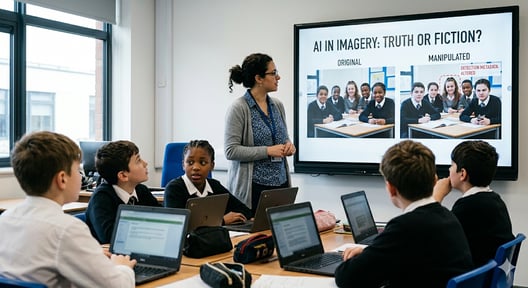
We are already aware of cases where pupils have taken and created sexual images of peers and staff. Therefore, it is also critical to evaluate how robust and effective our curriculum is at tackling some of these complex and fast moving issues. This must include helping pupils to know what to do if they believe a synthetic image of themselves or a peer has been created or shared.
Final Thoughts
Safeguarding our school community against AI manipulation isn't about erasing our digital presence; it is about building a culture of responsible digital behaviour. By taking proactive steps and leading transparent conversations with all of our stakeholders, we build greater trust and ensure our online spaces remain safe environments for everyone.
For support with reporting routes (such as Report Remove, Take It Down, or Stop NCII), take a look at reporting.lgfl.net or refer to the full guidance published by the UK Online Harms Early Warning Working Group.
Subscribe to our SafeguardED newsletter for further updates and follow us on LinkedIn.
The images in this article have been created using Gen AI.